Stainless steel cookware is one of the best tools you can have in your kitchen. It lasts forever, handles high heat like a champ, and gives you the kind of sear you simply can’t get with most other pans. There’s just one complaint that comes up over and over again. Food sticks.
That single frustration is what built the entire nonstick cookware industry. And while nonstick pans have their place, the reality is most people are relying on them because they were never taught how to use stainless steel properly.
Here’s the truth. You don’t need a special coating to make a pan act nonstick. You need technique.
Once you understand how to preheat your pan and control your cooking surface, stainless steel becomes incredibly smooth to cook on. Eggs, chicken, fish, it all works. And you get better browning, better flavor, and a pan that doesn’t need to be replaced every couple of years.
Whether you’re trying to move away from chemical coatings, get a proper sear, stop wasting money on pans that wear out, or just make cleanup easier, we’re going to fix what most people think is stainless steel’s biggest flaw.
Why Does Food Stick to Stainless Steel Pans?
Food sticks to stainless steel for a pretty simple reason. The surface isn’t perfectly smooth. Even though it looks polished, there are microscopic imperfections all over the pan. When proteins in your food hit that surface, they form strong bonds with the steel. That’s why your chicken feels glued down and your sponge feels useless trying to scrub it off later.
To fix this, we need two things working together. Heat and oil.
First, heat. This is where the Leidenfrost effect comes into play. When your pan is hot enough, water droplets don’t just sit and sizzle, they glide across the surface. That’s because they’re sitting on a thin layer of steam, not directly touching the pan. That same principle applies when you’re cooking. As moisture in your food heats up, it creates a subtle barrier that helps the food release instead of sticking.
Second, oil. Could you cook without it? Technically, yes. Should you? Absolutely not.
Oil fills in those microscopic imperfections on the surface of the pan, reducing the chances of those protein bonds forming in the first place. It also creates a more even cooking surface and helps transfer heat into the food more efficiently.
So here’s the takeaway. Oil helps prevent sticking from the start. Heat helps your food release once it hits the pan. Get both right, and stainless steel starts acting a whole lot more like nonstick, without any coating involved.
How to Preheat a Stainless Steel Pan
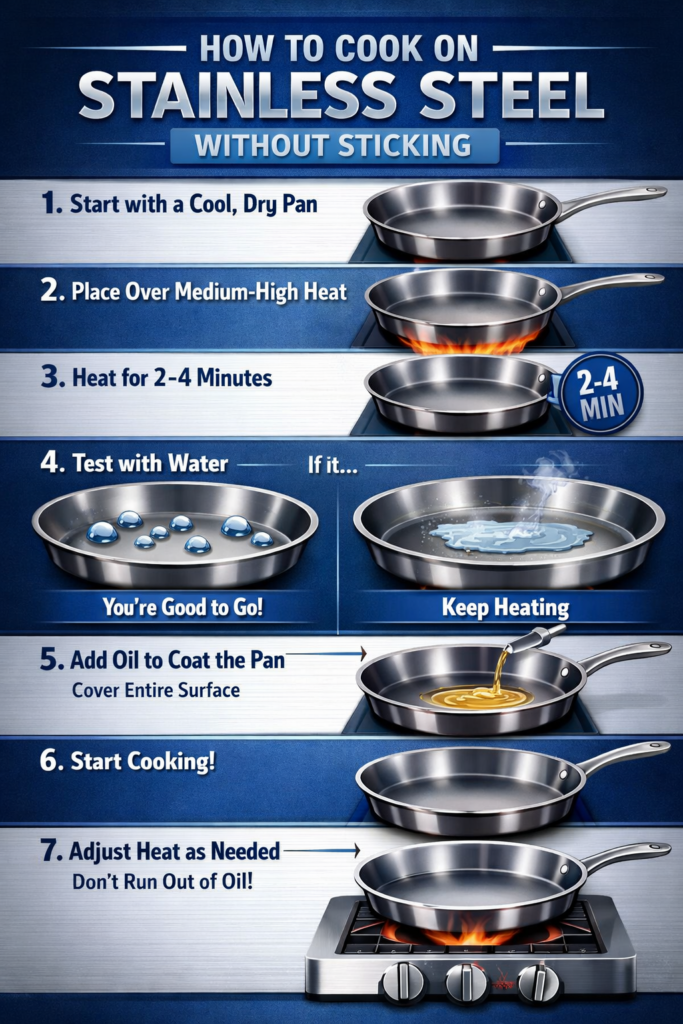
Start with a dry pan
I know it’s tempting to throw oil in right away, but don’t. Adding oil too early just means it sits there overheating before the pan is actually ready. That’s when it starts to smoke and break down. We want the pan hot first, then the oil.
Place it over medium to medium-high heat
This should match the heat you actually plan to cook with. It’s the sweet spot where the pan heats up efficiently without scorching. Stainless steel holds heat well, so you don’t need to blast it on high to get there.
Be patient
This is the part most people skip. Depending on your stove, it can take anywhere from 2- 4 minutes. Let it happen. This is where you’re setting yourself up for an easy cook instead of a frustrating one. Scroll my instagram page to entertain yourself if you need to.
Test with water
The water drop test isn’t perfect, but it’s solid. Flick a few drops of water into the pan. If they sizzle and evaporate instantly, it’s not ready. If they bead up and glide across the surface, you’re there. No sticking water usually means no sticking food.
Add oil
Now add your oil. You don’t need much, just enough to lightly coat the surface. It should shimmer, not smoke.
Now you’re ready to cook
At this point, your pan is hot, your surface is prepped, and you’ve eliminated the main reason food sticks. From here, it’s just cooking.
How Long to Preheat a Stainless Steel Pan
As with most things in cooking, the answer is it depends. But in most cases, you’re looking at about 2-4 minutes.
That range comes down to a few variables. Your stove output, the thickness and quality of your pan, and the heat level you’re using will all affect how quickly it gets there. A heavy tri-ply pan on a weak burner will take a bit longer than a thin pan on high heat.
If you like numbers, you’re aiming for roughly 400°F. That’s the zone where the pan is hot enough to create that nonstick effect without being so hot that you burn your oil the second it hits the surface. If you don’t have an infrared thermometer, no problem. The water drop test is more than enough to get you there consistently.
It’s also worth knowing that you can overheat your pan. If you leave it sitting too long and it gets ripping hot, just pull it off the burner or turn the heat down and give it a minute to come back into range. Stainless steel holds heat well, but 60-90 seconds is plenty for it to drop heat when the pan is +500°F.
Get this part right, and everything else becomes a lot easier.
How to Cook on Stainless Steel Without Sticking
If you’re more of a visual learner check out my video here
Common Mistakes When Cooking With Stainless Steel
If stainless steel feels frustrating, it’s usually not the pan. It’s one of these.
Not preheating enough
This is the biggest one. If your pan isn’t hot enough, food will stick every time. Stainless needs heat to create that nonstick effect. Use the water droplet test. If it doesn’t bead and move, you’re not ready yet.
Preheating too much
Yes, you can overdo it. If your pan gets ripping hot, your oil will smoke instantly, break down, and you’ll end up with uneven cooking and a worse end result. If you overshoot, just pull the pan off the heat for a minute and bring it back down.
Not using enough oil
You don’t need to drown your food, but you do need enough to coat the entire surface. A thin, even layer is what prevents sticking. Also, not all that oil ends up in your food, so relax a bit here.
Cooking on heat that’s too high
Max heat all the time is not the move. Stainless steel holds heat well, so medium to medium-high is where you’ll live most of the time. High heat has its place, like a hard sear on a steak, but it’s not your default.
Not letting food naturally release
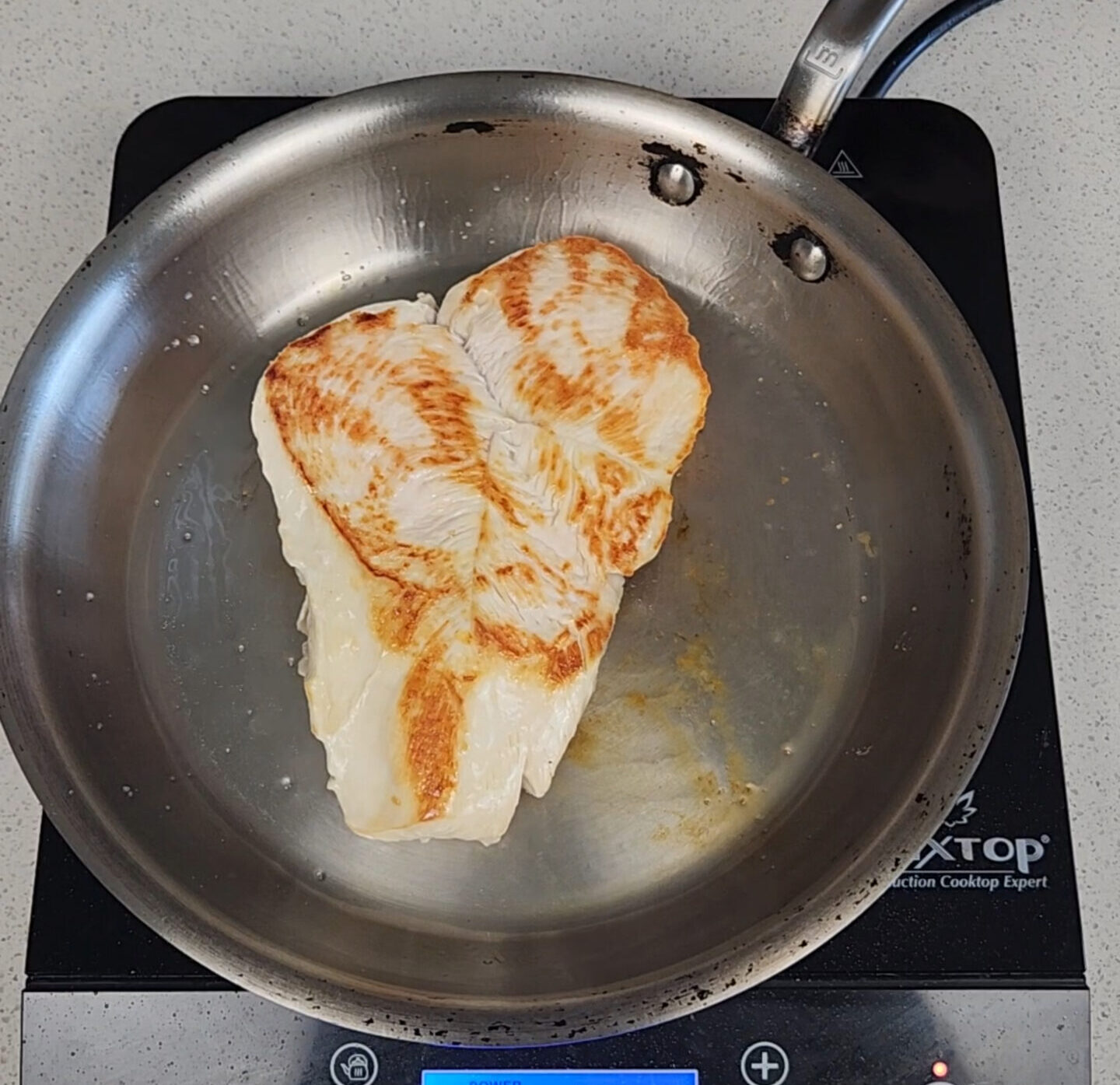
This is where people panic. Food will stick at first. That’s normal. That’s how you build a proper sear and develop fond. Give it a minute or two. Once it’s ready, it will release on its own with minimal effort.
Get these right, and stainless steel stops feeling like a fight and starts doing exactly what it’s supposed to do.
Changing this process for Cast Iron or Carbon Steel
The process for cooking with cast iron or carbon steel is the same. The only difference there comes after cooking when you need to make sure to oil your cookware to preserve the seasoning and prevent rust
Tips for Cooking on Stainless Steel
Patience. Patience is a virtue and it absolutely applies here. Be patient when preheating your pan and when letting food naturally release. These small moments of patience pay off big when it’s time to eat.
Preheating is the same for everything. Don’t overcomplicate it. Whether you’re cooking a steak or sautéing vegetables, start the same way every time. Medium-high heat, proper preheat, then oil the surface. Consistency here is what makes stainless steel work.
Clean your pan between cooks. You’ll build fond as you go, which is great if you’re making a sauce. But if you’re cooking multiple batches, like eggs for a group, leftover bits will burn. Just give the pan a quick wipe between rounds. If it’s properly preheated, food shouldn’t be sticking anyway.
Best Foods to Cook on Stainless Steel Pans
Pretty much anything you’d want to cook on your stovetop works in stainless steel. Eggs, steak, vegetables, even acidic sauces like tomato or wine-based reductions are all fair game. It’s one of the most versatile tools in your kitchen.
Where stainless steel really shines is in its ability to develop fond. Those browned bits that form on the bottom of the pan are packed with flavor. That’s the good stuff. You can turn that into a quick pan sauce, or deglaze and build it into a soup or larger dish.
If your goal is better flavor and better cooking technique, stainless steel delivers every time.
Mastering Stainless Steel Cooking
Mastering stainless steel cookware takes a little bit of knowledge upfront, but now you’ve got it. Preheat your pan, add your oil, and you’re set up for success. From here, it just comes down to practice.
And this is the fun part. You get to eat your reps. The more you cook with stainless steel, the more intuitive it becomes. You’ll start to feel when the pan is ready, when food will release, and how to control your heat without overthinking it.
Mastery isn’t a destination, it’s a direction. Keep cooking, keep learning, and enjoy the process along the way.
If you need any inspiration check out my recipes here!