
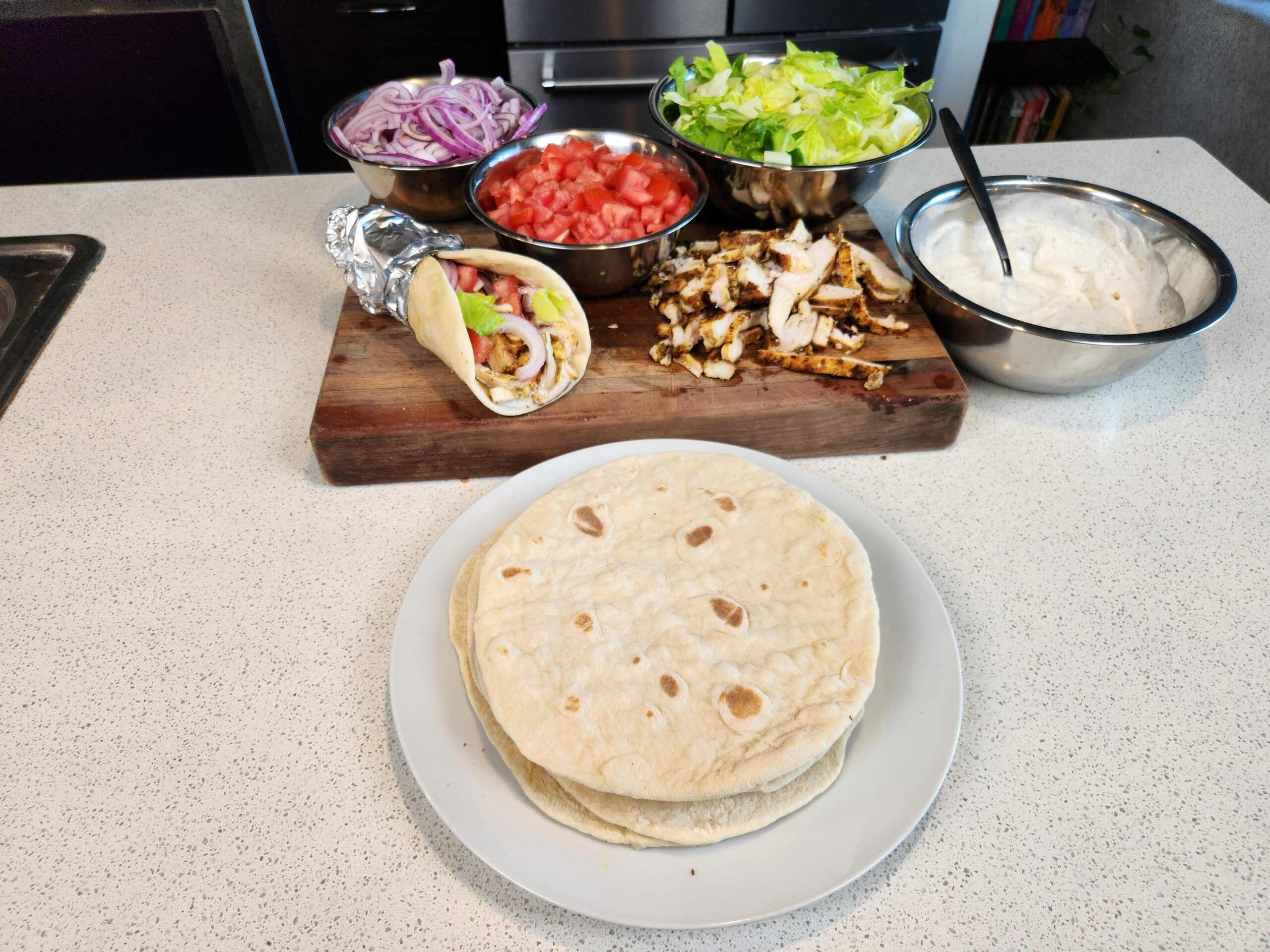
Ah, the Middle Eastern burrito that fueled me through high school. Packed full of bold flavors and tender meats. Shawarma is an incredibly versatile dish. Easily customizable to your specific flavor preferences, serving quantities, macro nutrient needs( or whatever you have left in your fridge), Shawarma delivers.
Eat it hot and fresh, meal prep it for the week, or freeze for later – shawarma can do it all!
What is Shawarma?
Shawarma originates from the Middle East all the way back from the Ottoman empire (had to bust out the high school history textbook for that one). The meat is traditionally cooked on a vertical spit, allowing the meat to baste itself during the cooking process. This is a wonderful method that maximizes flavor with the self-basting and the Maillard Reaction. This is more difficult to do at home, but cooking the meat in a sheet pan, on the stove, or in an air fryer serves as a wonderful alternative.
Where Does Shawarma Come From?
Shawarma has its roots all the way back in the 1800s in the Ottoman Empire. Shawarma took inspiration from Doner kebabs and Greek gyros. This dish has grown into a unique dish that is the national dish of Lebanon and Jordan…I mean it basically is. Shawarma even had a huge impact on modern Mexican cuisine, inspiring the classic tacos al pastor. Nowadays, Shawarma can be found everywhere. The reach of shawarma knows no bounds, and your kitchen should not be where it stops.
What to Eat with Chicken Shawarma
Shawarma can be paired with tahini, pickled radishes, sumac onions, rice, pita, potatoes, and much, much more. Every single day of high school, I went across the street for a shawarma for lunch. The restaurant was a Chipotle-style restaurant where you get to choose everything on your wrap. I swear, you could’ve eaten there for a lifetime and never had the same thing twice.
This dish is really what you want it to be! I encourage you to experiment, explore, and try new things to make this recipe refreshed and hit just like new again. You won’t regret it!
Chicken Shawarma Cooking Techniques:
Nothing crazy here. If you have a rotisserie pit, this is a great opportunity to use it – however, that is not required. Otherwise, there is some simple bread techniques, knifework and basic cooking techniques in this recipe that will keep you on your chef game. Speaking of which, if you want an extra challenge, try deboning your own chicken for this recipe!

Chicken Shawarma Recipe
The nutrition facts below are for 8 oz of chicken breast, 1/4 cup yogurt sauce, 1 pita and veggies.
8
servings30
minutes45
minutes564
kcalIngredients
4 LBS Chicken Breast, Butterflied
1 TBSP Ground Cumin
1 TSP Turmeric Powder
1 TBSP Ground Coriander
3 Cloves Garlic, Minced or Paste
1 TBSP Smoked Paprika
1 TBSP Ground Cardamom
.5 TBSP Black Pepper
1 TBSP Salt
3 TBSP Olive Oil
- Yogurt Sauce
2 Cups Nonfat Greek Yogurt, Unflavored
2 Cloves Garlic, Minced
2 TSP Cumin
2 TSP Lemon Juice
Salt & Pepper to Taste
- Pita Bread
240 g Water, Warm (~110° F)
6 g Active Dry Yeast
4 g Sugar
360 g Flour
Pinch Kosher Salt
Marinate the Meat
- Butterfly the breasts until even thickness.
- Combine all marinade ingredients and chicken in a bowl/bag, making sure all sides are covered in the marinade. Let it rest in the fridge for at least 3 hours, preferably overnight
- Start the Pita
- Combine water, yeast and sugar in a mixer bowl and let rest for 10 minutes to bloom. You should notice the yeast foaming up.
- In a separate bowl, combine flour and salt. Mix well so there are no pockets of salt in the final product.
- Add dry ingredients to the wet in the stand mixer bowl. Mix on low to start and move up to medium speed as the dough starts to form. Mix until fully combined.
- Let rest for 1 hour or until doubled in size.
- Prep Your Veggies for Serving
- Chop your lettuce into a medium dice. Cut and deseed the tomatoes into a medium dice. Slice your red onion into half moons.
- Make the Yogurt Sauce
- Combine the yogurt, garlic, cumin, lemon juice, salt and pepper in a bowl or tupperware and fully mix to combine. Leave in the fridge to keep cool and allow the flavors to fully incorporate.
- Cook the Meat
- Heat a pan over medium high heat. Place the meat in the pan, making sure not to crowd it. After 3-6 min a good crust should have formed.
- Flip the chicken and continue to cook. Cook until and internal temp of 160 deg F. If the outside is looking too dark before the inside has finished cooking, transfer to a sheet pan and place into a 300 deg F oven to finish cooking.
- Once all chicken is cooked, set aside to rest while we finish the pita.
- Back to the Pita
- On a lightly floured surface divide the dough into 8 equal balls. Let rest 10 min for the gluten to relax.
- Preheat a dry carbon steel, stainless steel or cast iron skillet over medium high heat.
- Roll the pita into flat circles. Approximately 8-9 Inch in diameter and ⅛ inch thick.
- Once the skillet is good and hot, toss in a pita to cook for 90 seconds a side, or until a they have a good color. Repeat on the other side.
- When the pita is finished cooking set aside in a clean dish towel while you cook the other pitas.
- Time to Assemble!
- Slice the chicken thinly against the grain.
- Take a pita, apply ¼ cup of the yogurt sauce then ~8 oz chicken breast. Top with the lettuce, tomato and onion. Wrap together, securing with aluminum foil or tooth pick if needed.
Note: If meal prepping I recommend separating the hot and cold ingredients. Place the yogurt sauce and vegetables together and the pita with the chicken. This way you can quickly warm up the pita and chicken then top with the remaining ingredients. - Enjoy!
Recipe Video
Notes
- Prep time will differ depending on how long you choose to marinade your chicken. After the marinade is done, prep time should be no longer than 45 min - 1 hour.
Nutrition Facts
- Serving Size: 1 g
- Calories: 564kcal
- Fat: 12g
- Carbohydrates: 41g
- Protein: 62g