

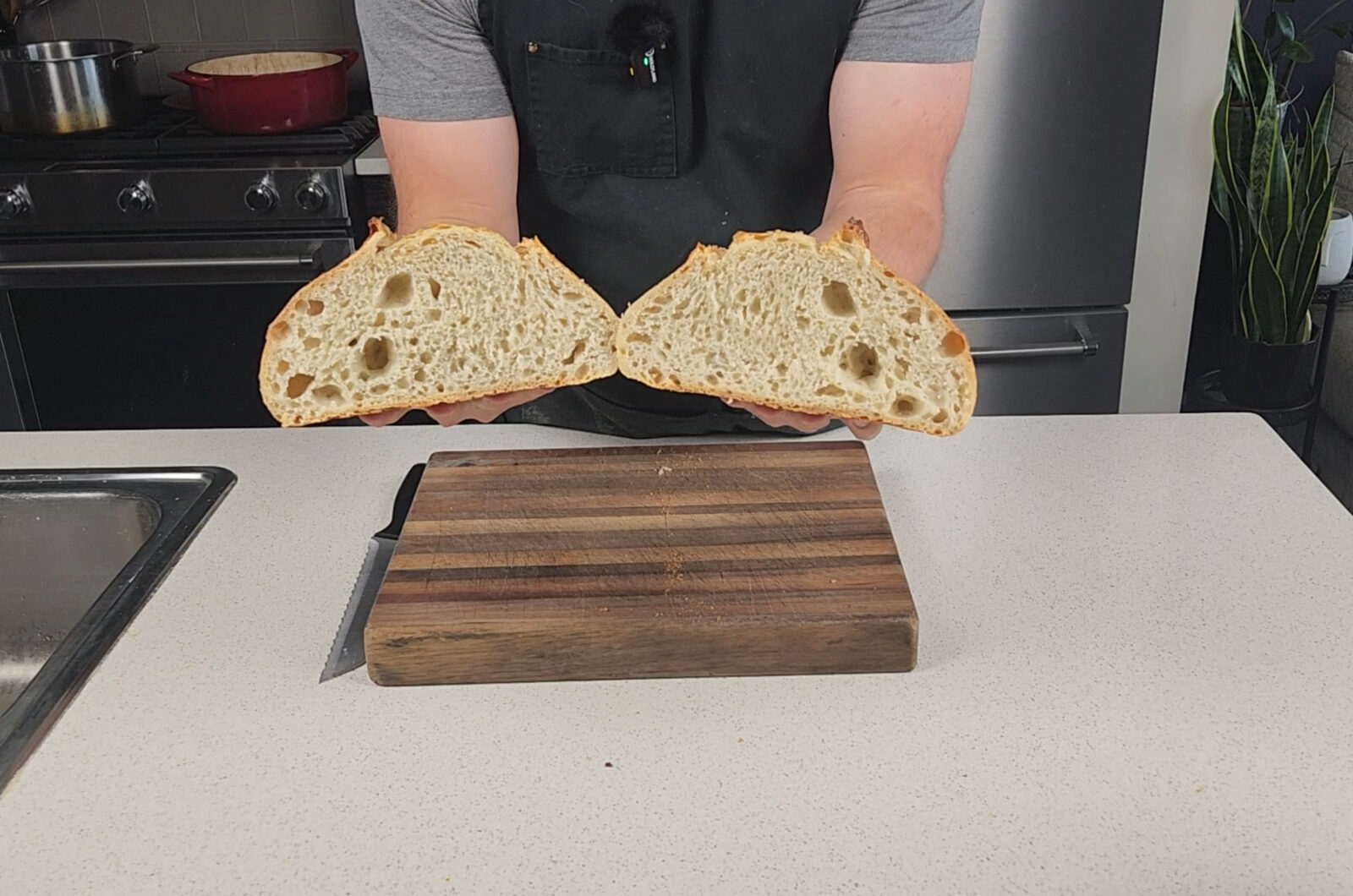
Sourdough bread is a beautiful symphony of a crispy crust, airy interior, and tangy, complex flavor. The best part is that bread like this isn’t just something you find at a bakery; it’s completely possible to make at home and easier than you might think. Using a cold fermentation process takes the pressure off by slowing things down. It requires less hands-on time, builds deeper flavor, and gives you that artisan texture with minimal effort. Let’s dive into how to make cold ferment sourdough from start to finish.
What Is Cold Ferment Sourdough?
Cold fermentation refers to letting your shaped sourdough proof in the fridge before baking. This process can take anywhere from 3 to 48 hours and is almost completely hands off, making your bread-making schedule more flexible. The longer the dough ferments, the deeper and more complex the flavor becomes. This method lets you create anything from a mild, classic sourdough taste to a tangy, flavor-packed loaf.
Fermentation happens when the wild yeast and bacteria in your starter produce carbon dioxide. Like all chemical reactions, this process is temperature dependent. The cold environment of the fridge slows it down, allowing the flavors to develop gradually without producing too much gas. This keeps the texture light and airy while enhancing the flavor. Compared to a room-temperature fermentation, cold fermenting gives you that signature sourdough depth you just can’t get from a same-day bake.
Why You’ll Love This Cold Ferment Method
The cold ferment method gives your sourdough that incredible complex flavor and depth that’s hard to achieve with a same day bake. It also saves you time. You only need to be present for a few hours on the first day, then you bake the next day. Compared to the 8 or more hours required for a same day loaf, this method gives you a lot more freedom in your schedule.
Cold fermentation is also incredibly flexible. If you plan to bake your loaf in the morning but need to push it to the evening, that’s no problem. The chilled environment keeps the dough stable, while a warm ferment would continue to rise and change the texture. Another bonus is that scoring becomes much easier. A cool loaf is firmer, allowing you to make clean cuts and even create designs if you want. This method also works perfectly for meal prep. You can assemble the dough a day or two ahead of time, then bake it fresh whenever you’re ready. All you need to do is pull it out of the fridge and pop it in the oven for a fresh, steaming loaf of bread.
How Long to Cold Ferment Sourdough
Cold fermentation times can vary quite a bit depending on your schedule and the flavor you want to achieve. Most bakers find that anywhere between 3 and 48 hours works well. Shorter ferments produce a mild, classic sourdough flavor, while longer ferments develop a deeper tang and more complex taste.
Be mindful not to let your dough sit too long, though. You can overproof during a cold ferment if it’s left in the fridge for several days. If you notice your loaf starting to shrink or lose volume, it’s a sign that the dough has gone too far. At that point, bake it right away. It won’t improve with more time, and baking immediately will help you salvage the best texture possible.
Ingredients You’ll Need
Core Ingredients
The base of sourdough is incredibly easy. You will need 4 things. You can choose to make your own starter or purchase one. Unless you specifically want to make your own, I’d recommend asking your local bakery for some or buying a dehydrated one online. Here is the list of what you’ll need
- Sourdough starter (active and bubbly)
- Make yourself or purchase for convenience
- Bread flour (mention protein content)
- Bread flour specifically. The increased protein content allow more gluten development. If you use a different type of flour you will still make bread but won’t get the ideal texture you want
- Water
- Filtered is preferred but tap works too
- Salt
- Kosher is the chef preference but table salt will work too
- Kosher is the chef preference but table salt will work too
Optional Add-Ins
While not necessary for this simple recipe, there are endless ways to experiment with new flavors and textures in your cold ferment sourdough. Here are a few easy options to try.
Whole wheat flour
You can substitute a portion or all of your bread flour with whole wheat flour. Start small, using about 15% whole wheat to get a feel for how it changes the flavor and structure. Whole wheat adds a nutty depth and slightly denser texture that pairs beautifully with the tang of sourdough.
Herbs, seeds, or olives
Mix in herbs like rosemary or thyme for an aromatic, savory twist. Seeds such as sunflower, flax, or sesame add a nice crunch and subtle flavor. You can also fold in chopped olives for a Mediterranean-style loaf that’s packed with character. These add-ins make your bread uniquely yours while keeping the process simple.
Cold Ferment Sourdough Recipe
Learn how to make a fresh loaf of sourdough bread at home with the cold ferment sourdough recipe
1
Loaf15
minutes1
hour3-48
HoursIngredients
125 g Starter
350 g Water, filtered, ~80 deg F
500 g Bread Flour
10 g Salt
- For Dusting
Rice Flour
Bread Flour
Directions
- Feed the Starter
- Feed your starter 125 g starter, 125 g water and 125 g bread flour.
- Set aside on the counter overnight, covered. I like to keep my starter in a 4 cup deli container
- Day One
- Check your starter has approximately doubled in size. If so you are good to go. If there is a problem with your starter you shouldn’t proceed as you won’t get any leavening without a healthy starter
- To the bowl of a stand mixer, combine your sourdough starter and water. Whisk together until the starter is fully dissolved.
- Sift your bread flour into the bowl then add the salt
- Affix dough hook and knead on low speed until fully combined and no dry spots remain. You can absolutely do this by hand. No machinery required.
- Cover and let rise in a warm place. I.e. Proofing oven, oven with light turned on or counter top of a warm kitchen.
- Every 30-60 min perform a series of stretch and folds or slap and folds. See notes for explanation
- Once the dough has expanded 50% it’s time to shape the loaf
- Turn the dough out onto a clean work surface. Stretch the dough out into a rectangle shape
- Take a third of the dough and fold it over itself. Take the opposite third and fold it over top of the rest of the loaf.
- Roll the loaf up. Starting on the thin edge, roll the loaf onto itself until it is in a compact cylinder.
- Pinch the end together to seal off
- Once the loaf is not trying to unroll itself, you can start dusting with equal parts bread flour and rice flour
- Place your loaf, seem side up, into your banneton. Wrap in plastic wrap or place into a plastic bag. You want minimal air contact so the outside doesn’t dry out too much.
- Place into the fridge to cold ferment
- Day Two: Cooking Day
- Preheat your oven to 450 deg F with your dutch oven inside. Leave your dutch oven to preheat for at least 20 minutes
- Remove your bread from the fridge and any plastic wrapping
- Turn bread out onto a piece of parchment paper, seem side down
- Optional: Preform a decorative score on your bread. Let your artist out and try to make some flours or carve the initials of a loved one.
- Score the loaf along the length of the entire loaf. Look for the score to be about a ½ inch deep.
- Remove the dutch oven from the oven. Place ~½ cup of ice cubes in the bottom of the dutch oven. They will begin to melt immediately.
- Place the loaf into the dutch oven and cover with the lid
- Place the dutch oven into the oven and cook for 20 minutes, covered.
- After 20 min remove the lid and continue to cook
- Continue cooking until the internal temperature reads 200 deg F. Typically 20-40 min.
- After internal temperature is reached, remove from dutch oven and place on a wire rack to cool
- Wait for the loaf to completely cool before slicing. Tragic I know but otherwise it’s this weird gummy mess that burns your mouth.
- Slice and enjoy!